
Searching Caswell County Criminal Dockets
North Carolina's free eCourts Portal is the fastest place to begin. Choose Smart Search. Enter a record number or a name in Last, First format, then click an underlined case number in the results. You'll see the public Case Summary, sometimes called a Register of Actions, drawn from Caswell's Enterprise Justice records. It covers the event history, the assignment, hearings, and any displayed disposition. Just remember it is not a certified court record.
The official Caswell criminal calendar offers a second way to check schedules. For everything else, the Caswell County Clerk of Superior Court is the place to go. That office offers a public terminal, the local electronic or paper file, copies, and answers to setting questions. Call 336-459-4000. Do you need an official court-file record? Mail and in-person requests belong with that local office.
- Open Portal and choose Smart Search.
- Enter a case number, or enter the person's name as Last, First.
- Use Caswell location, Criminal case type, status, or filing-date filters to narrow the return.
- Open the matching underlined case number and read the Case Events, Hearings, and Dispositions sections separately.
- Contact the Caswell Clerk for a copy, certification, a missing record, or a time-sensitive court setting.
Caswell Criminal Smart Search
Portal can search Criminal, Infraction, Out of State Probation, and Out of State Parole matters. A precise case number is the quickest route. If you search by name, narrow the results. Use Caswell location, case status, or filing date. Portal caps results at 200. That limit means your filters need work, not that the case is missing. Public access is free and stays anonymous. A My Cases account can save a case for you, though it unlocks nothing extra in restricted records.
Read a Caswell result as one case record, not a countywide crime measure. The state's FY 2024 Sentencing and Policy Advisory Commission appendices counted 45 felony convictions in Caswell, or 2 per 1,000 adults. They also counted 243 misdemeanor convictions, or 13 per 1,000 adults. Those are annual conviction counts. They are not total filings, docket events, or a tally of individual residents. A Portal search stays a case-by-case lookup.
The Judicial Branch's Recovery Courts information lays out the statewide treatment-court framework.
Caswell's contact directory still lists a Drug Treatment Court telephone route. Confirm schedules, eligibility, and participant details with the court itself rather than inferring anything from a general criminal result.
Inside a Caswell County Criminal Docket
A public Caswell Case Summary opens with case and assignment information. From there it may list parties, status, Case Events, Dispositions, Hearings, and Financial Information. That applies only where relevant. The event list works as a timeline. Recorded outcomes live in the disposition section. A hearing line marks a scheduled event, not a final result. Keep those functions straight and the criminal record reads much more easily.
| Case number | A four-part Enterprise Justice number, such as 25CR000123-160; the final suffix identifies Caswell. |
|---|---|
| Assignment information | The court division or assignment context, important when a matter moves from District Court to Superior Court. |
| Case events | Recorded procedural events, including service-related warrant or summons entries when they apply. |
| Hearings | Scheduled court events when data is present; check the current date through Search Hearings or the clerk. |
| Dispositions | The section to read for the recorded result rather than relying on a status label or calendar line alone. |
The official G.S. 15A-145 text is one statute governing particular expunction routes.
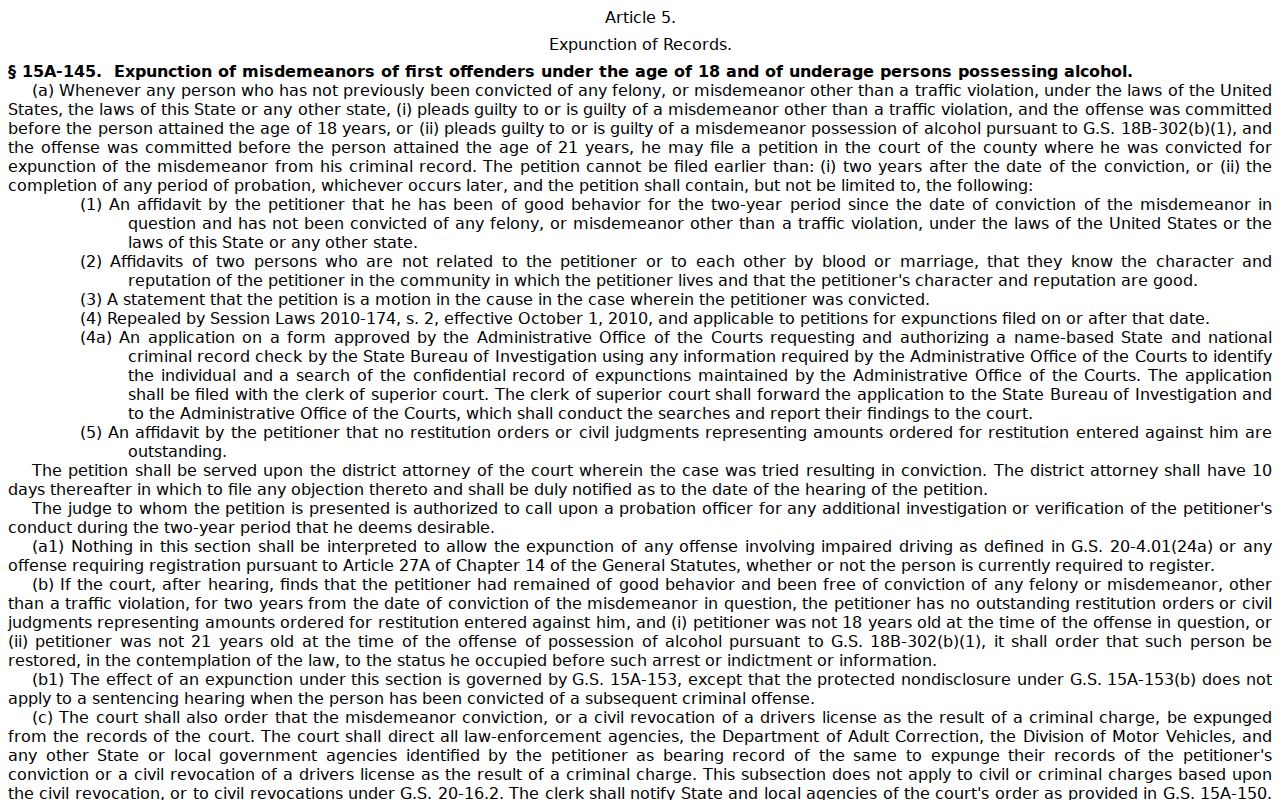
An expunction rule affects what records remain available. A bare Portal status is still no substitute for the clerk's official record.
Caswell Criminal Warrant Events
Portal's own materials identify the event language for warrants, orders for arrest, and criminal summonses: issued, returned served, returned unserved, reset to unserved, or recalled. Each phrase describes a record event and nothing more. None of them alone establishes guilt, dismissal, or any other final outcome. Before you conclude anything, open the Dispositions section and read the later events.
Case statuses add another layer. You might see Pending, Disposed, Remanded, Transferred to Superior Court, Voluntarily Dismissed with Leave, or Pending Expungement. Each is only an index status. The surrounding Case Summary gives the context a one-word result cannot.
How a Criminal Case Moves
Most criminal dockets follow a familiar arc: filing, arraignment, pretrial activity, a plea or trial, disposition, and sentencing when those steps occur. The exact order varies with the charge and the case path. In Caswell, a felony can show District Court history before a Superior Court disposition, so treat a transfer entry as a pointer to the assignment and later disposition records, not as the end of the case.
Docket flow: Filing › Arraignment › Pretrial › Plea or Trial › Disposition › Sentencing
Caswell Criminal Court Split
District Court, District 22, handles misdemeanors and infractions in Caswell. Superior Court, District 22, handles felony trials. Both divisions share the county's unified clerk and Caswell Portal structure, but their roles are not interchangeable. Check the Caswell court assignment, type code, and event history to see which division holds the matter now and where the next hearing may land.
The Legislature's juvenile court-record statute is the official word on that separate juvenile-record rule.
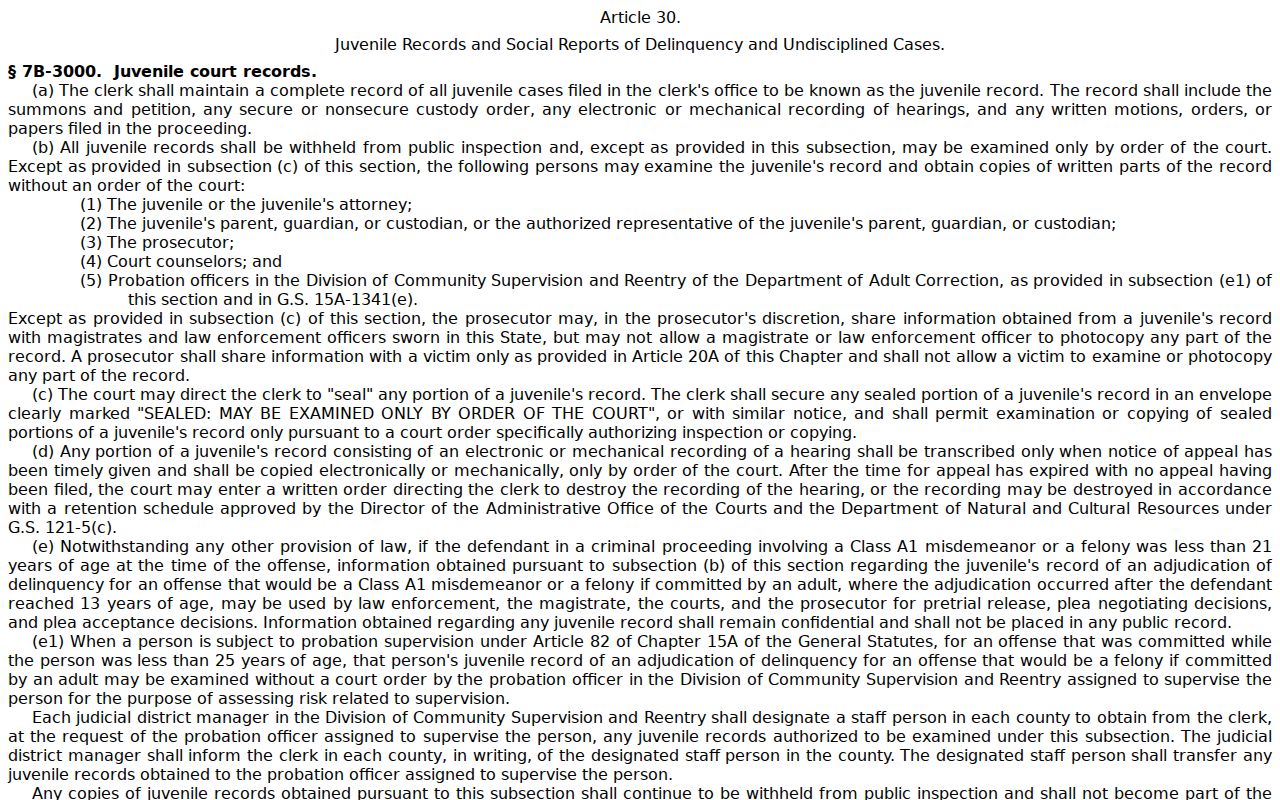
District Court also handles juvenile matters. Juvenile records carry separate confidentiality rules and do not appear in ordinary public criminal-search results.
Courts That Hold Criminal Dockets
One office holds it all. The Caswell County Clerk of Superior Court keeps the Caswell court file for both trial divisions. That covers District and Superior. So the Caswell courthouse is where you end up when you need a public terminal, the paper file, a certified copy, or an answer the Caswell Portal will not give. A terminal in some other North Carolina clerk office can still search criminal records statewide. Even so, certification of a Caswell file belongs with the Caswell clerk alone.
There is no separate county criminal court docket here, and no justice-of-the-peace docket either. A Caswell case did not show up the way you expected? Ask the clerk to confirm the case type and its assignment. Do not hunt for a parallel system that does not exist.
The courthouse sits at 139 East Church St. in Yanceyville. One building and one clerk structure serve both divisions of Caswell court records. That arrangement can make a Caswell criminal matter look simpler than it really is. The assignment information still tells you which division heard the case or holds it now. A Caswell felony may carry earlier Caswell District Court entries. The Superior Court path takes over after that. A Caswell misdemeanor or infraction generally starts, and often stays, in District Court.
Caswell Criminal Clerk Terminal
When a Caswell criminal record is missing, old, or restricted, go through the clerk rather than a public Portal screen. The same goes for a record you need copied. Judicial Branch guidance lets anyone search criminal matters at clerk-office self-service terminals. Search by defendant name, case number, victim, or witness. To see the paper file, visit the clerk office in the county where the case lives. Tell the Caswell Clerk what you want. Give the case number and the document. Say whether you want a plain or certified copy, and how you would like it delivered.
The clerk is the custodian of Caswell court documents. A statewide administrative-record request cannot replace getting the Caswell criminal file from the office that actually holds it.
Start copy questions with the Caswell Clerk. The statewide source posts no fixed Caswell turnaround time or docket-sheet price. G.S. 7A-308 sets the clerk fees statewide. That includes $3 for a certificate under seal and $10 for an exemplification. Clerk-prepared copies cost $2 for the first page of each document. Each additional page or fraction adds $0.25. Caswell staff can confirm which charge fits a given Caswell document and whether it can be certified.
Sealed Dockets and Public Access
Public inspection of clerk records has a statutory baseline in G.S. 7A-109, though legal limits apply. The Portal is only a public view built on the clerk's record. It is not the certified record itself. Sealed matters never show up as ordinary public results, and neither do unreturned warrants, juvenile records, specified protective matters, or confidential special proceedings. Date-of-birth displays lose the month and day too.
Key Rules:
G.S. 7A-109 keeps clerk records open for inspection except where law prohibits access.
G.S. 7B-2901 protects specified juvenile case records from ordinary public inspection.
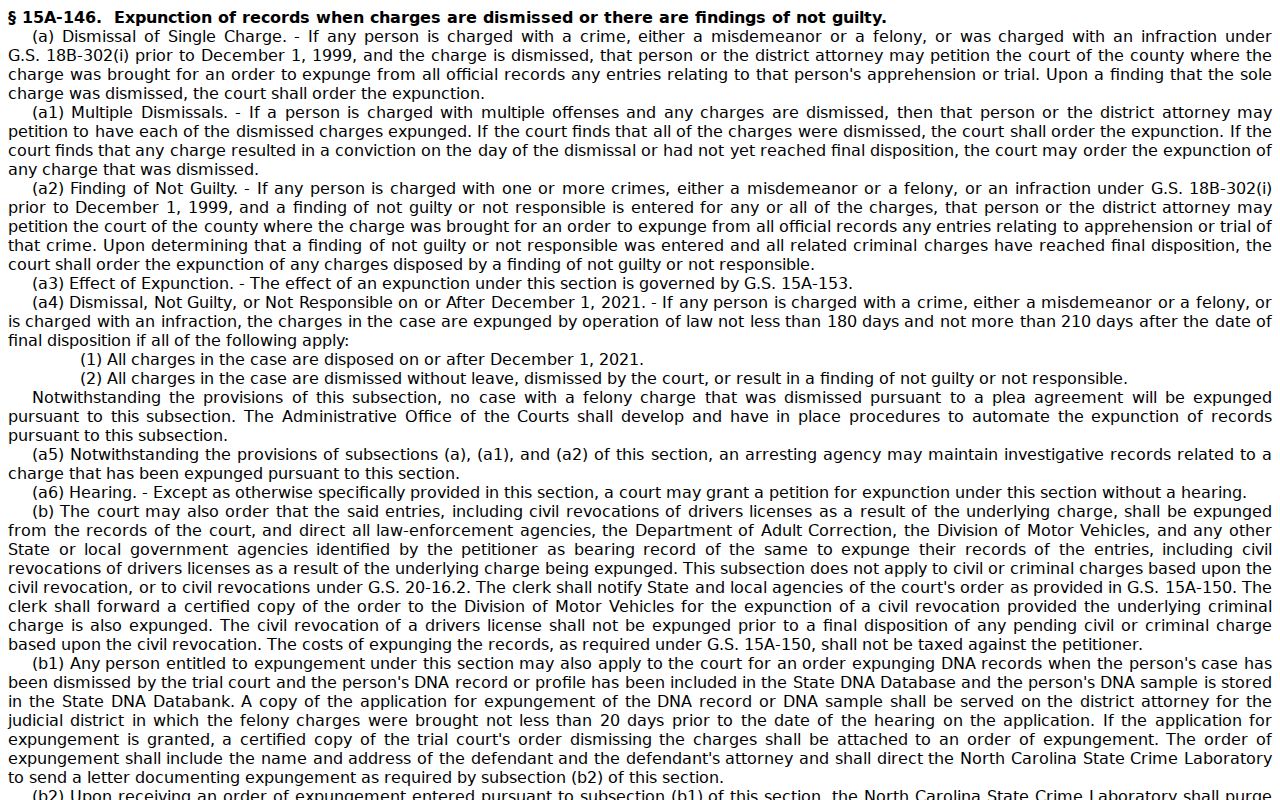
G.S. 15A-146 provides an expunction framework for covered dismissals and not-guilty outcomes.
For files involving abuse, neglect, and dependency, the Legislature's juvenile-record statute states the confidentiality rule.
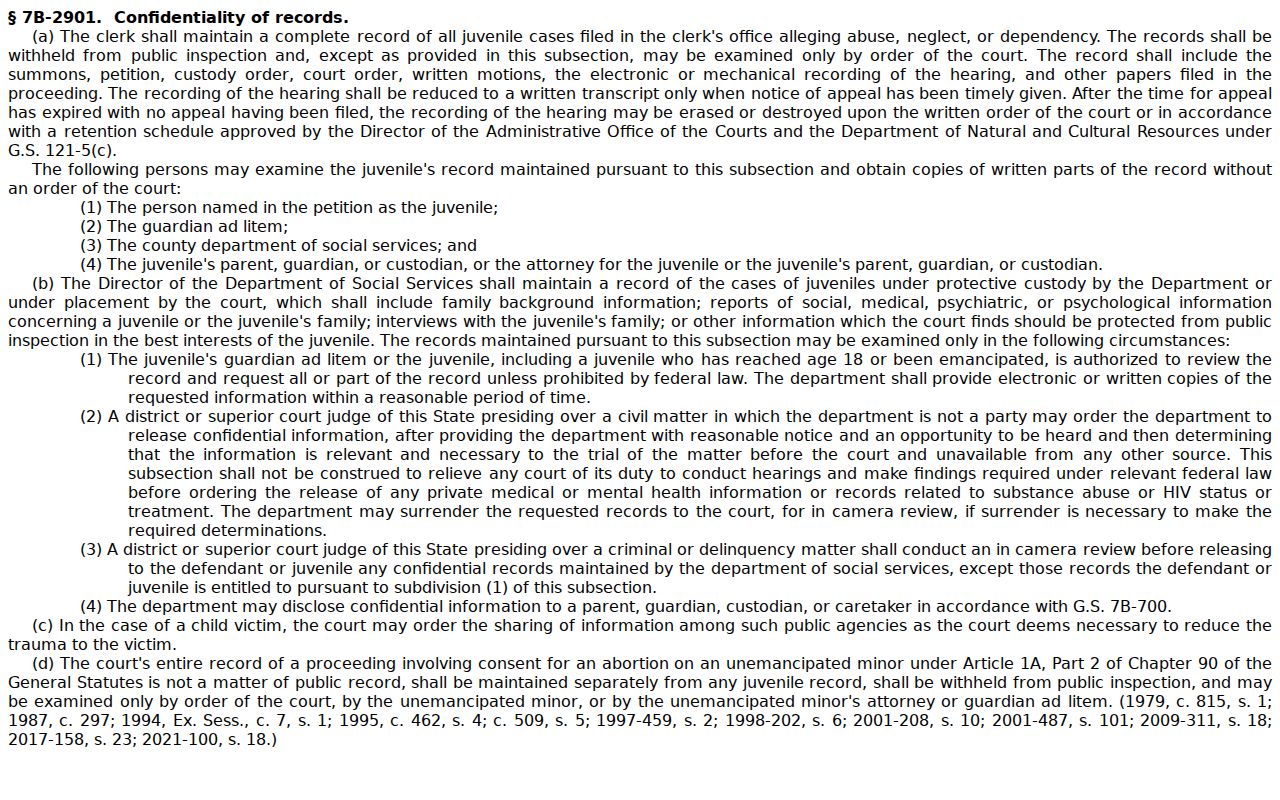
Because of that limit, a public criminal docket search is never a complete inventory of every court matter tied to a name. Treat what you find as one layer, not the whole record.
Caswell Criminal Expungement Status
Pending Expungement shows up as a Portal criminal or infraction status. It does not prove an expunction was completed. Once an expunction is granted, the clerk may have no record left to give you. A no-match can mean several things. It may be a search-format problem, an access restriction, or a case filed somewhere else. Ask the Caswell Clerk about record availability. You can also use the official expunction process for your question. The Legislature's dismissal and not-guilty expunction statute is the official source on that separate process.
Read the Case Summary, the restrictions, and clerk availability together. That way a Portal absence never gets mistaken for a final legal answer. The Caswell Clerk holds the Caswell court-file record, and Caswell Portal access can differ from what the clerk can provide once a record is restricted or expunged.